
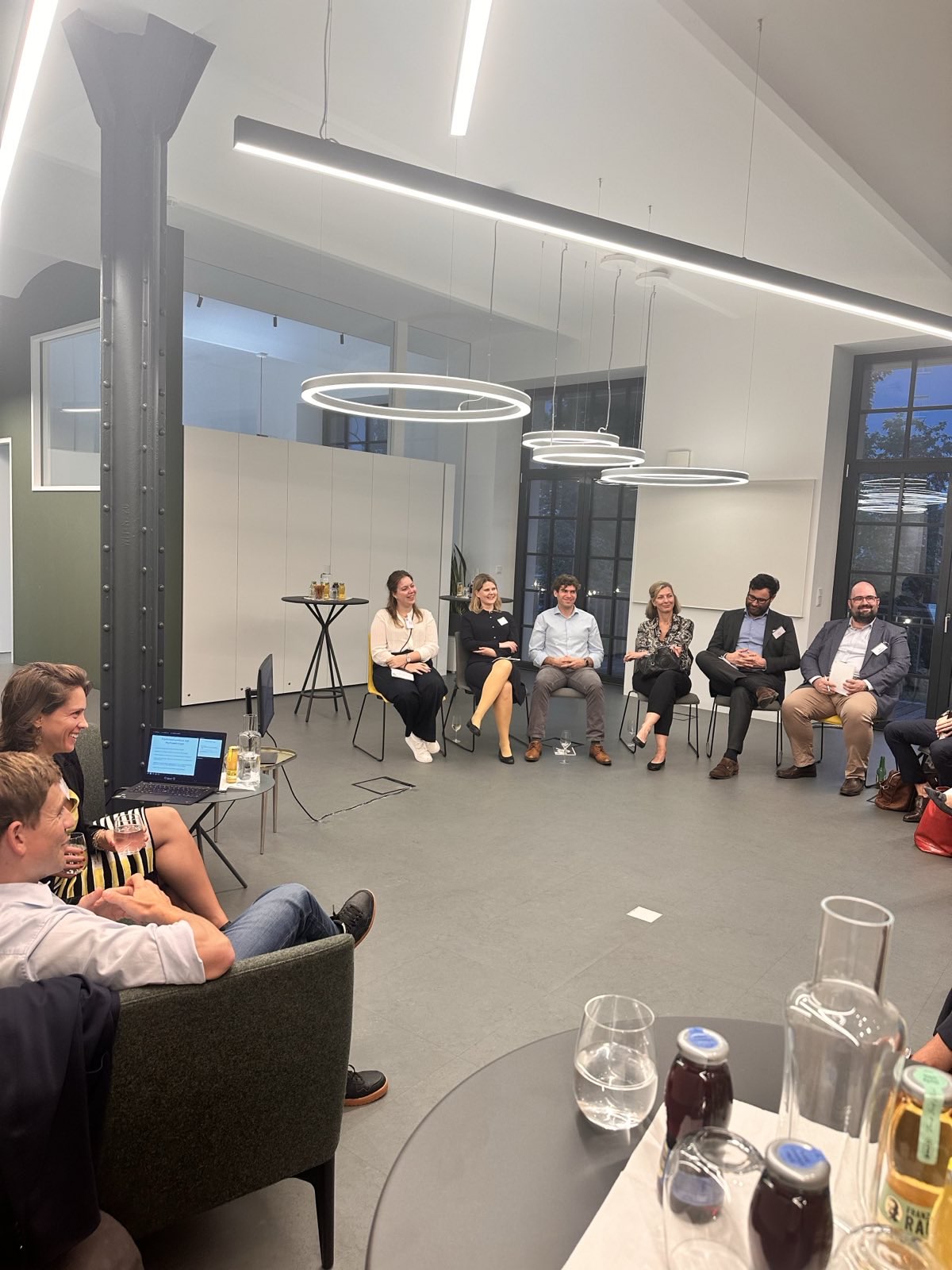
How reliable are memories? To what extent does our perception shape what we consider to be the truth? And what does that mean for us as lawyers in our day-to-day professional lives?
We explored these fascinating questions on the evening of September 5, 2025, as part of our CIRCLE Talk on the topic “How True Is Reality?”. Dr. Paul Plener, Professor of Medicine and Director of the University Clinic for Child and Adolescent Psychiatry at the Medical University of Vienna, impressively demonstrated why truth is never simply black and white—but rather a complex interplay of memory, context, and subjective experience.
Topics discussed included:
- the limits of human memory
- the implications for lawyers’ day-to-day professional practice
- scientific findings on the search for truth and the reconstruction of lived experiences
A key takeaway from the evening: There is no single, uniform perception of reality. Every person processes sensory impressions differently—influenced by personal experiences, expectations, and emotions. What we perceive as “reality” is therefore never absolute, but merely a highly probable version of what happened. Objective truth ultimately remains unattainable—in part because our brains learn only through errors and contradictions. Thus, we can never fully share our realities with one another.
This insight has far-reaching significance, particularly in everyday legal practice: When statements are based on memories, we must always be aware that they, too, are merely approximations of a truth that every person experiences—and remembers—differently.
Our Key Takeaway:
Our brain constructs reality—never objectively, always subjectively. Insight arises when we acknowledge these limitations.
A heartfelt thank you to Paul Plener for his fascinating insights—and to our guests, who enriched the evening with their keen interest, questions, and engaged discussion. The CIRCLE Talk made it clear that exploring memory and perception is not only scientifically fascinating but can also be crucial to our work.
